Essential Steps for Filing for Bankruptcy During 2026 thumbnail

Essential Steps for Filing for Bankruptcy During 2026

Published en
3 min read


Say a worker's non reusable earnings are $2,000.

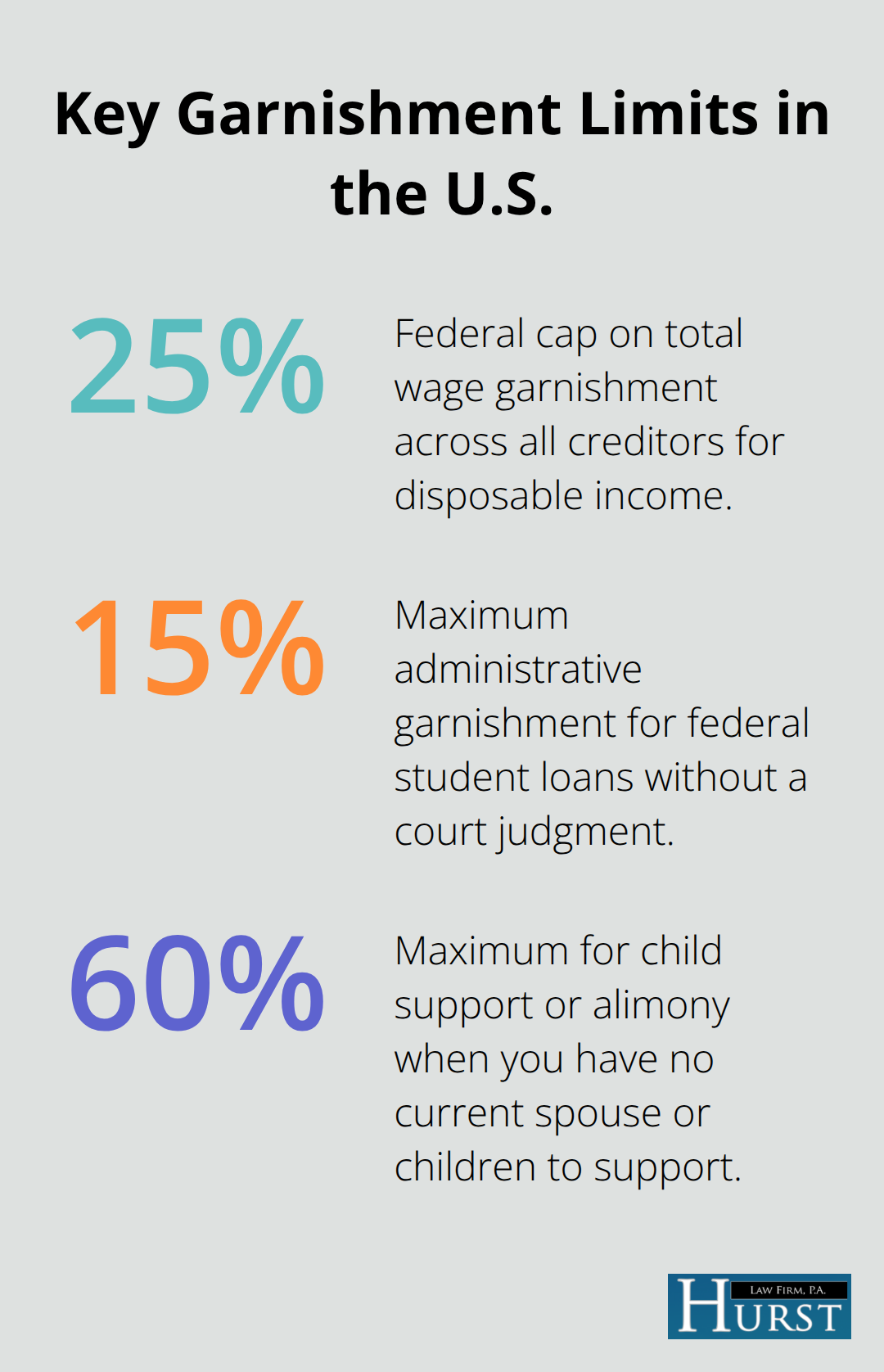
No. Under Title III of the Customer Credit Security Act (CCPA), you can not discharge an employee whose profits undergo garnishment Nevertheless, the CCPA does not protect employees whose profits go through 2 or more garnishments. You need to start garnishing an employee's wages when you get a trainee loan garnishment order.

apfsc.orgapfsc.org


Stop withholding if you get a main notice. You can quickly set up a wage garnishment in Patriot's payroll software application. You are responsible for remitting garnishments to the proper agencies. You can find out how to establish a wage garnishment here.

Comparing Chapter 7 and Chapter 13 Paths

The U.S. Department of Education (the Department) today announced that it will delay the application of uncontrolled collections on federal student loans, consisting of Administrative Wage Garnishment (AWG) and the Treasury Offset Program (TOP). The short-term hold-up will allow the Department to carry out significant trainee loan repayment reforms under the Working Families Tax Cuts Act (the Act) to give customers more choices to repay their loans.

The Act reduces the variety of federal trainee loan repayment strategies, removing a confusing maze of options and making it easier for debtors to choose either a single basic payment strategy or income-driven payment (IDR) strategy that finest fulfills their needs. This consists of a brand-new IDR plan that waives unsettled interest for customers with on-time payments whose payments do not completely cover accrued interest, which includes little matching payments from the Department in certain circumstances to make sure that outstanding principal is minimized each month.

The delay in collections will provide defaulted debtors extra time to assess these new payment options once they combine their loans or finish a repayment or rehabilitation agreement. The Act likewise offers borrowers a 2nd opportunity to rehabilitate a defaulted loan, enabling them to get their payments back on track and get the loan out of default.

The hold-up in collections will provide defaulted borrowers extra time to start the rehab procedure, including the capability to restore their loan a 2nd time.

The Trump administration will resume garnishing incomes from student loan debtors in default in early 2026, the U.S. Education Department verified to NPR. The relocation follows a years-long time out in wage garnishment due to the pandemic. "We anticipate the very first notifications to be sent out to approximately 1,000 defaulted debtors the week of January 7," a department spokesperson informed NPR.

The Strategic Advantage of Debt in 2026

Long-Term Consequences of Filing Bankruptcy in 2026

A borrower remains in default when they have not made loan payments in more than 270 days. Once that takes place, the federal government can try to collect on the debt by taking tax refunds and Social Security advantages, and likewise by purchasing a company to withhold approximately 15% of a debtor's pay.

Betsy Mayotte, the president and founder of The Institute of Trainee Loan Advisors, states even though debtors have actually expected this, the timing is regrettable. "It will correspond with the boost in healthcare costs for numerous of these defaulted customers," she stated, describing the premium increases for Affordable Care Act health insurance coverage that begin in 2026.

The Strategic Advantage of Debt in 2026

Another 3.7 million are more than 270 days late on their payments and 2.7 million remain in the early stages of delinquency. "We have actually got about 12 million customers today who are either delinquent on their loans or in default," Preston Cooper, who studies trainee loan policy at AEI, informed NPR.

Comparing Chapter 7 and Chapter 13 Options

Cory Turner added to this story.

(Short Article Updated Jan. 6 and 8, 2026) This article lists federal and state customer law changes scheduled to go into impact or expire throughout the period from December 1, 2025, through January 1, 2027. Other customer law modifications will be enacted in 2026 and will enter into result in 2026; this post lists changes whose efficient dates have actually already been arranged as of December 31, 2025.

Latest Posts

How the Automatic Stay Stops Wage Garnishment

Published Aug 26, 26
4 min read

How to File for Bankruptcy in 2026

Published Aug 26, 26
4 min read

Professional Support for 2026 Debt Filings

Published Aug 26, 26
5 min read